
Fashion and wearables · Discovery
Visual readingOxford Shoe
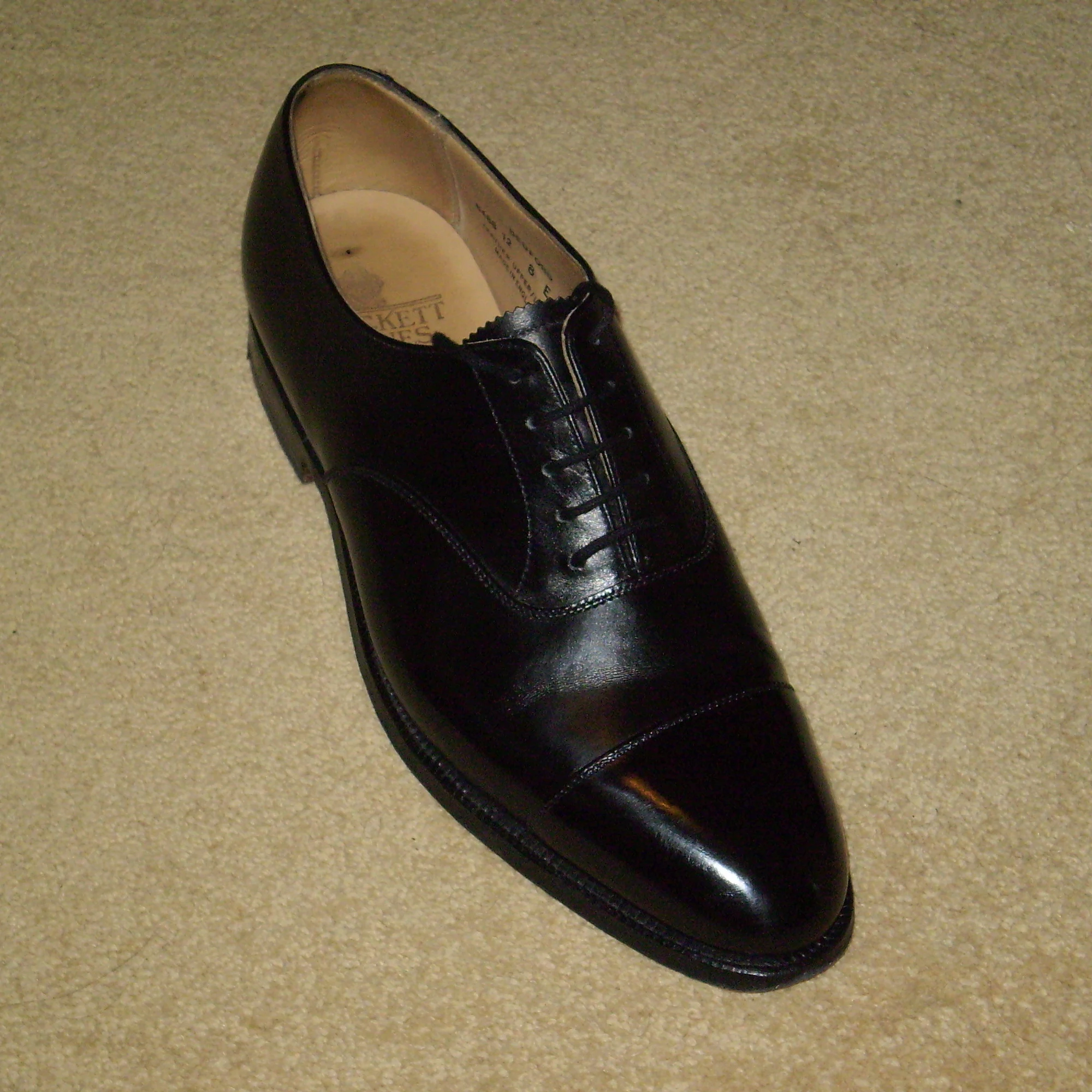
A shoe whose closed lacing and layered leather make footwear read as a small piece of tailoring.
Summary
A shoe whose closed lacing and layered leather make footwear read as a small piece of tailoring.
Reading status
A visual reading of an Oxford shoe type, not an authenticity, fit, comfort, or condition assessment.
At a glance
A low shoe with closed lacing, a structured toe, layered panels, and a sole that separates the foot from the ground.
- Subject
- Oxford shoe
- Period
- Early 20th century to present
- Materials
- Leather or synthetic upper, sole
- Setting
- Footwear design reference
Visible evidence
Why it matters
An Oxford shoe makes construction visible through seams and proportion. Its form is a negotiation between the shape of the foot, the discipline of a formal wardrobe, and the need to walk.
Visible evidence
Look closer
Three details to carry with you.
- 01
Follow the closed lacing and notice how it pulls the upper together.
- 02
Compare the toe shape with the heel and sole.
- 03
Look at the seams as lines that divide, reinforce, and decorate.
Documented context
How it was made
Leather or synthetic upper · Rubber or leather sole · Laces, stitching, and lining
Documented context
Story and context
The V&A documents a brogued pair by Alan McAfee from around 1980 and notes that this classic Oxford form has seen minimal design change since the early 20th century. The shoe pictured here is a separate visual example of the type, not that documented pair.
Documented context
Culture and context
The shoe can signal formality, uniform, or subculture depending on what surrounds it. The object alone cannot tell the whole social story.
Documented context
Honest facts
Keeping certainty visible.
- A photo cannot verify maker, size, material, comfort, condition, or authenticity.
- This is a visual guide to footwear design, not a fit or purchasing recommendation.
Interpretation
Interpretation
One way to read it.
The shoe feels formal because its surface is controlled. It asks the foot to enter a designed outline.
Another reading
The same outline can become playful through colour, sole, or wear. Formality is not fixed in the object alone.
This example follows the same order as an Art Says Hi result. Visible details come first, documented context comes next, and interpretation stays clearly marked.
Take another look
Which line controls the shoe's character: the lacing, toe, sole, or seam?
Upload a photoSources
Follow the sources, then return to the image. Some links lead to a collection or publisher website.
Image credits
Oxford shoe1.jpg
Kan8eDie (opens in a new tab)CC BY-SA 3.0 (opens in a new tab)
Resized and converted to WebP for local delivery; composition otherwise unchanged.