
Architecture and places · Discovery
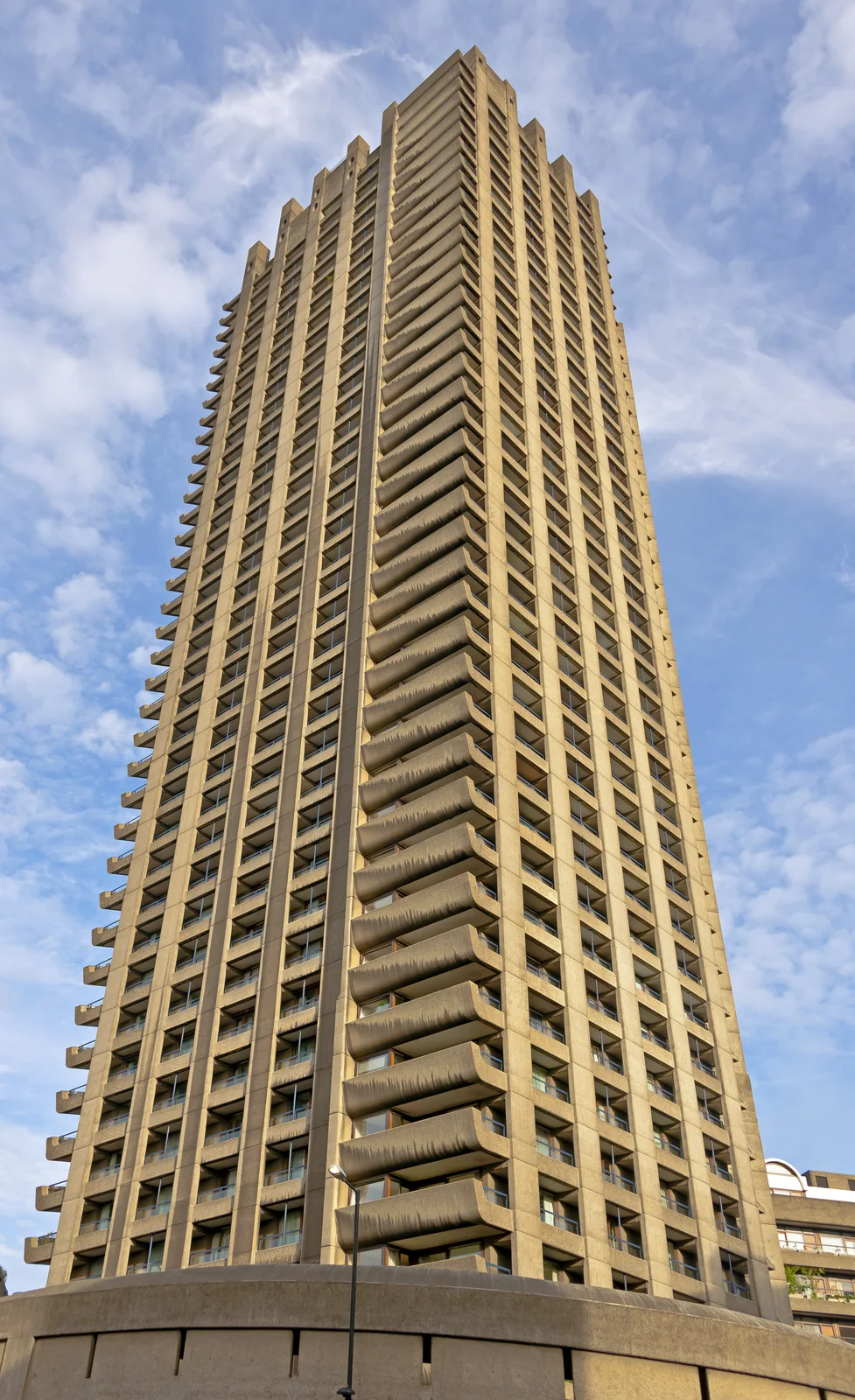
Documented placeBarbican Estate
Concrete, water, planting, and walkways make a city feel layered rather than flat.
Summary
Concrete, water, planting, and walkways make a city feel layered rather than flat.
Reading status
A documented architectural complex. The reading covers visible form only and does not stand in for resident, access, or conservation knowledge.
At a glance
A dense modernist estate where towers, terraces, bridges, and planted spaces overlap.
- Designed by
- Chamberlin, Powell and Bon
- Built
- 1950s–1980s
- Materials
- Concrete, brick, glass
- Setting
- London, England
Visible evidence
Why it matters
The Barbican is useful to scan because it asks whether brutal material can also make room for care, pause, and movement.
Visible evidence
Look closer
Three details to carry with you.
- 01
Follow a pedestrian route rather than reading the towers as a single façade.
- 02
Compare the repeated concrete texture with softer planting and water.
- 03
Notice how elevated walkways change what counts as street level.
Documented context
How it was made
Reinforced concrete · Brick and glass · Water, planting, and elevated paths
Documented context
Story and context
The estate was planned as a large postwar residential and cultural complex, developed over decades rather than built as one isolated block.
Documented context
Culture and context
It is often reduced to a debate about whether concrete is beautiful. Looking at circulation and planted space gives the architecture more than a surface verdict.
Documented context
Honest facts
Keeping certainty visible.
- A photo cannot explain the full resident experience, accessibility, maintenance, or building condition.
- The page is about visible design relationships, not a safety or planning assessment.
Interpretation
Interpretation
One way to read it.
The estate feels like a city reorganized into layers. Distance from the road becomes a social and visual choice.
Another reading
The layers can also feel defensive. What protects residents from traffic may make the public realm harder to read.
This example follows the same order as an Art Says Hi result. Visible details come first, documented context comes next, and interpretation stays clearly marked.
Take another look
Where does the estate invite you to slow down, and where does it make you feel routed?
Upload a photoSources
Follow the sources, then return to the image. Some links lead to a collection or publisher website.
Image credits
Lauderdale Tower, Barbican Estate, London.jpg
Daniel Case (opens in a new tab)CC BY-SA 3.0 (opens in a new tab)
Resized and converted to WebP for local delivery; composition otherwise unchanged.