
Architecture and places · Flagship
Visual readingVictorian London Terrace
A row of homes turns repetition into a portrait of a street.
Summary
A row of homes turns repetition into a portrait of a street.
Reading status
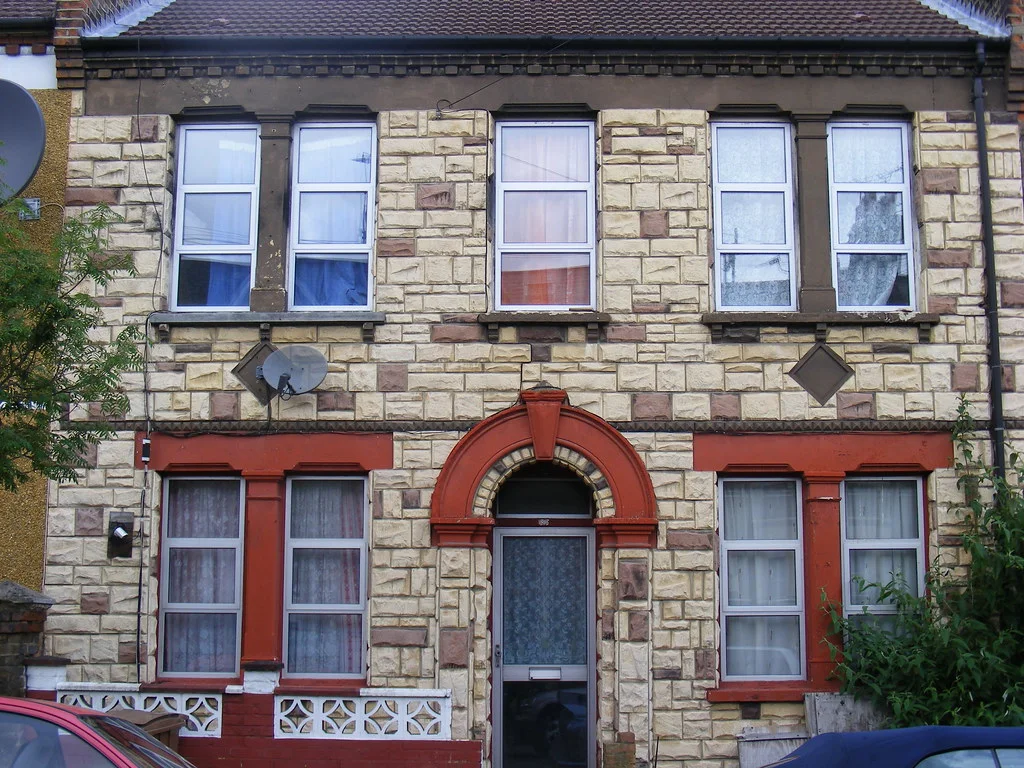
A visual reading of a Victorian terrace type. The exact address and history would need local records.
At a glance
A repeated street frontage with bays, steps, window rhythms, and small differences that interrupt the row.
- Subject
- Victorian terrace
- Period
- c. 1890
- Materials
- Brick, stone, wood, glass
- Setting
- London, England
Visible evidence
Why it matters
A terrace is an everyday composition. Its repeated doors and windows create order, while paint, curtains, plants, and repairs let individual lives show through.
Visible evidence
Look closer
Three details to carry with you.
- 01
Trace the line of roof, cornice, and bay windows across the row.
- 02
Compare repeated architectural parts with the small changes at each threshold.
- 03
Notice how steps and railings choreograph the movement from street to interior.
Documented context
How it was made
Brick and stone · Timber and glass · Paint, ironwork, and later repairs
Documented context
Story and context
Victorian terraces were built as connected urban housing, using repeated plans to create density while leaving room for variation in detail and occupation.
Documented context
Culture and context
The street is not a single monument. It shows how design enters ordinary life through repeated decisions that people inherit, alter, and maintain.
Documented context
Honest facts
Keeping certainty visible.
- A photograph can support visual observations but cannot prove the exact date or architect of one address.
- The page does not assess property condition, ownership, or planning status.
Interpretation
Interpretation
One way to read it.
The row feels like a group portrait. It speaks through repetition first, then lets difference become visible.
Another reading
The repeated façades can feel less communal than controlling. Uniformity may be the pressure that makes each small deviation matter.
This example follows the same order as an Art Says Hi result. Visible details come first, documented context comes next, and interpretation stays clearly marked.
Take another look
Which detail makes one home feel different? Look for the smallest interruption in the repeated rhythm.
Upload a photoSources
Follow the sources, then return to the image. Some links lead to a collection or publisher website.
Image credits
Double Fronted Victorian c 1890
sludgegulper (opens in a new tab)CC BY-SA 2.0 (opens in a new tab)
Resized and converted to WebP for local delivery; composition otherwise unchanged.