
Architecture and places · Flagship
Documented placeSagrada Família
A building where structure, ornament, and light keep changing jobs.
Summary
A building where structure, ornament, and light keep changing jobs.
Reading status
A well-documented architectural site. The visual reading is exploratory and not a structural, access, or preservation assessment.
At a glance
A monumental basilica with branching towers, dense surface detail, and coloured light inside.
- Designed by
- Antoni Gaudí and later collaborators
- Built
- 1882–present
- Materials
- Stone, concrete, tile, glass
- Setting
- Barcelona, Spain
Visible evidence
Why it matters
The Sagrada Família rewards the same looking method as a painting, but the frame keeps moving. Columns become trees, light becomes material, and the building asks the body to look upward.
Visible evidence
Look closer
Three details to carry with you.
- 01
Follow one vertical line from the floor through the branching columns.
- 02
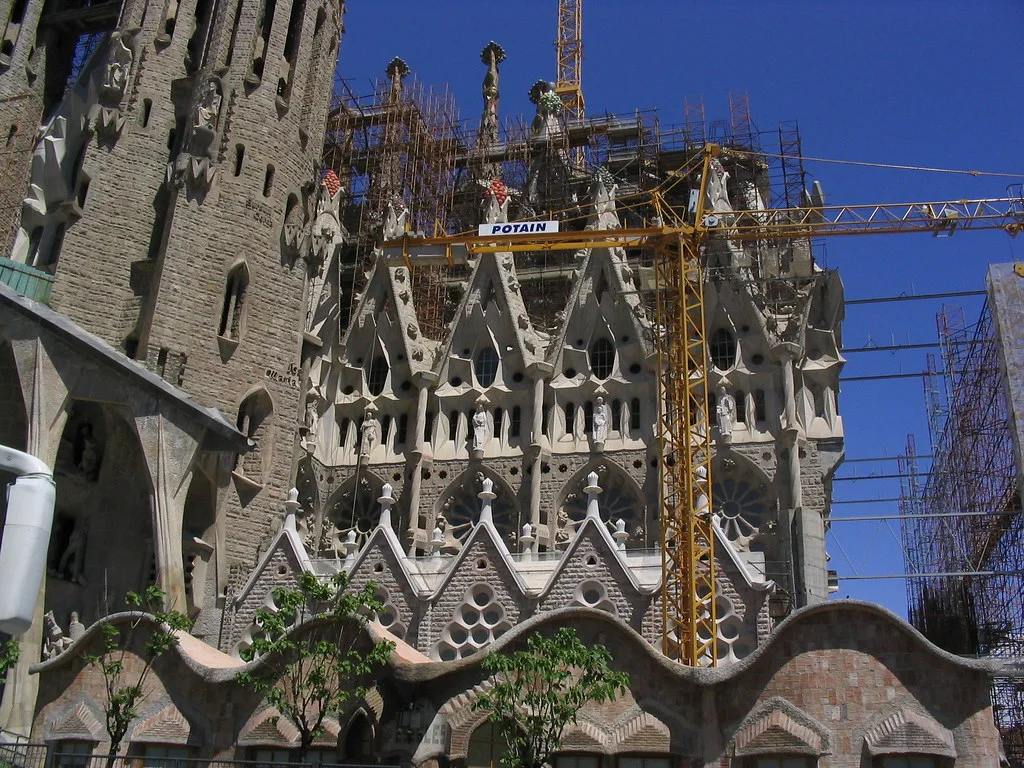
Compare the unfinished and finished-looking surfaces instead of treating the building as one uniform object.
- 03
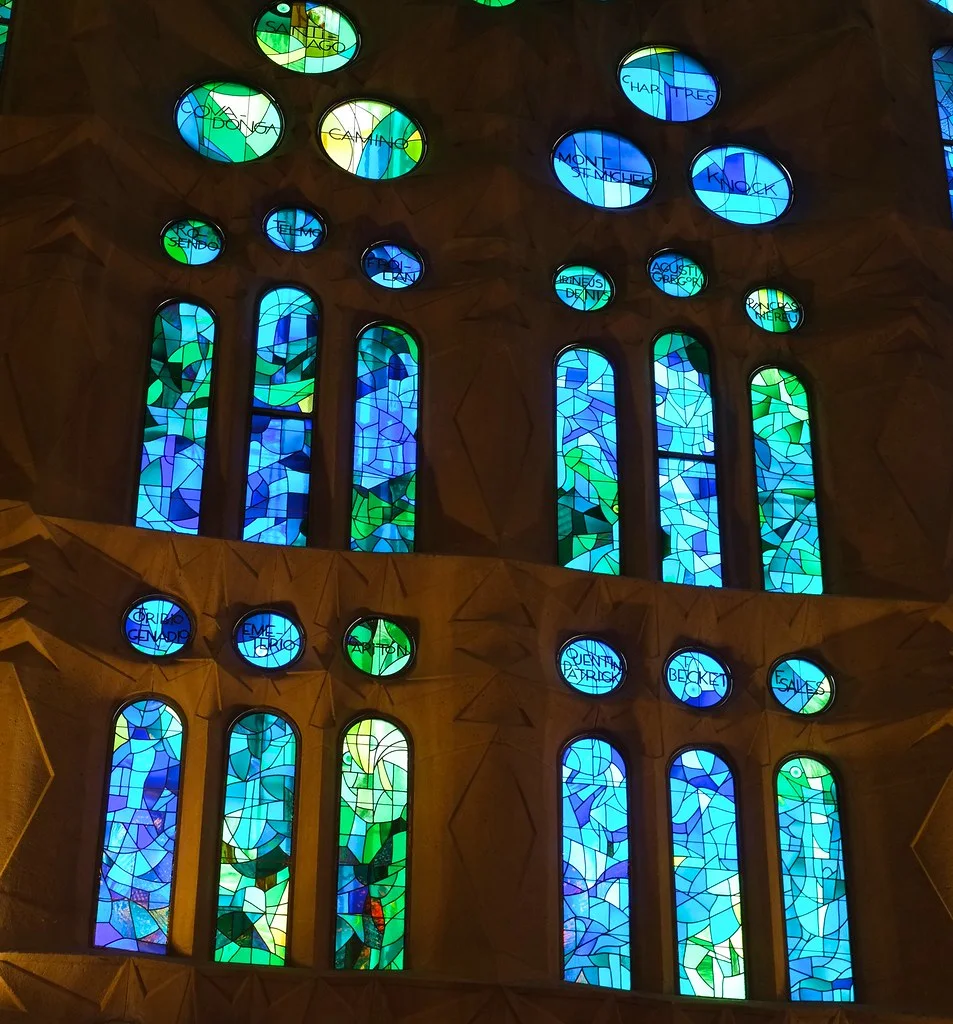
Notice how coloured light changes the apparent temperature of the stone.
Documented context
How it was made
Stone and concrete · Branching structural forms · Stained glass and ceramic detail
Documented context
Story and context
Gaudí's design grew through a long construction history, and the basilica continues to be completed by later teams rather than existing as a single finished moment.
Documented context
Culture and context
The building is often described through its symbolism, but the visual experience begins with weight, repetition, and the movement of a person through space.
Documented context
Honest facts
Keeping certainty visible.
- Construction, authorship, and completion are historical subjects with their own records; a photo cannot settle them all.
- This page is not a structural safety assessment or an architectural survey.
Interpretation
Interpretation
One way to read it.
The building feels alive because its ornament is not applied decoration alone. It makes structure appear to grow.
Another reading
The same density can feel overwhelming rather than organic. The building may ask for surrender more than comprehension.
This example follows the same order as an Art Says Hi result. Visible details come first, documented context comes next, and interpretation stays clearly marked.
Take another look
Where does the building feel most like a structure, and where does it feel most like a living form?
Upload a photoSources
Follow the sources, then return to the image. Some links lead to a collection or publisher website.
Image credits
Sagrada Familia
neusitas (opens in a new tab)CC BY-SA 2.0 (opens in a new tab)
Resized and converted to WebP for local delivery; composition otherwise unchanged.
Sagrada Familia
Cannoy (opens in a new tab)CC BY 2.0 (opens in a new tab)
Resized and converted to WebP for local delivery; composition otherwise unchanged.