
Vehicles and mobility · Discovery
Visual readingLondon Routemaster Bus
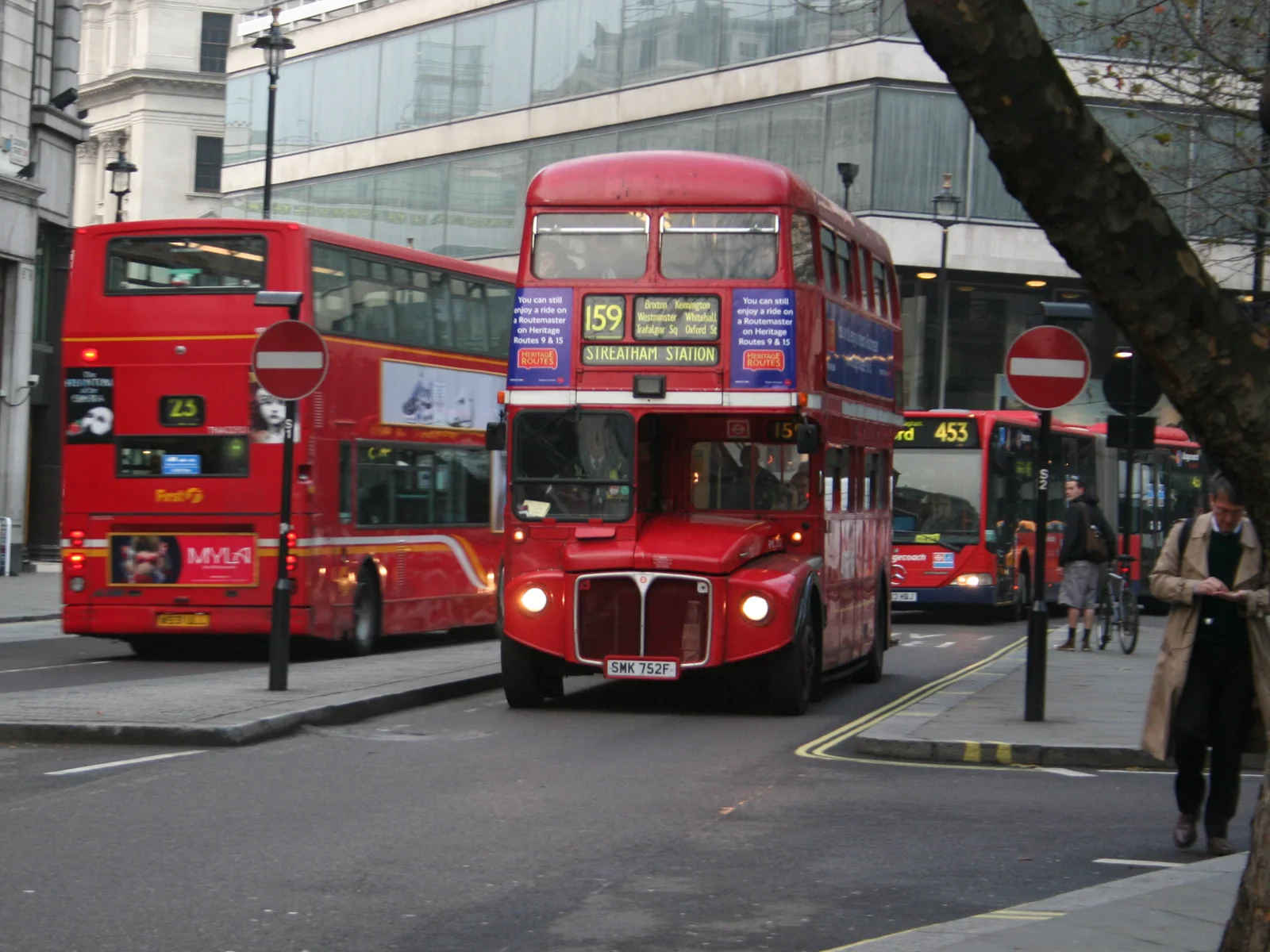
A double-decker whose stairs, windows, and red body turn public transport into a moving section of the city.
Summary
A double-decker whose stairs, windows, and red body turn public transport into a moving section of the city.
Reading status
A visual reading of a Routemaster type, not a current-service, safety, condition, or vehicle-record check.
At a glance
A red double-decker bus with repeated windows, a high upper deck, and a rear or front profile that reads from far away.
- Design lineage
- London bus design
- Period
- 1950s reference
- Materials
- Painted metal, glass, systems
- Setting
- London streetscape
Visible evidence
Why it matters
The Routemaster is a vehicle designed to be seen in relation to other people. Its visual identity comes from repetition, colour, and the way bodies move through a shared interior.
Visible evidence
Look closer
Three details to carry with you.
- 01
Count the windows and see how the two decks create separate bands.
- 02
Notice how the staircase or open platform changes the bus's silhouette.
- 03
Compare the red body with the street and traffic around it.
Documented context
How it was made
Painted metal body · Glass windows · Rubber and mechanical systems
Documented context
Story and context
The Routemaster was developed for London transport in the 1950s and became a recognisable part of the city's public visual language.
Documented context
Culture and context
The bus is remembered as both infrastructure and symbol. Its colour and form can make a city feel present even when the vehicle is stopped.
Documented context
Honest facts
Keeping certainty visible.
- A photo cannot verify a route, service status, model variant, condition, or safety.
- The page is a visual culture reading, not transport information.
Interpretation
Interpretation
One way to read it.
The bus feels civic because its body is designed around collective movement, not one owner's identity.
Another reading
Its strong colour can turn public service into nostalgia. The symbol may outlive the everyday experience it once carried.
This example follows the same order as an Art Says Hi result. Visible details come first, documented context comes next, and interpretation stays clearly marked.
Take another look
What makes the bus feel like part of London: the red, the height, the windows, or the way it shares the street?
Upload a photoSources
Follow the sources, then return to the image. Some links lead to a collection or publisher website.
Image credits
Arriva London Routemaster bus RML2752 (SMK 752F), Cockspur Street, route 159, 9 December 2005 uncropped.jpg
Jon Bennett (opens in a new tab)CC BY 2.0 (opens in a new tab)
Resized and converted to WebP for local delivery; composition otherwise unchanged.