
Vehicles and mobility · Flagship
Design referencePorsche 911
A sports car whose roofline, lights, and repeated curves make speed feel composed.
Summary
A sports car whose roofline, lights, and repeated curves make speed feel composed.
Reading status
A vehicle design reference and visual reading, not a model authentication, safety check, valuation, or mechanical assessment.
At a glance
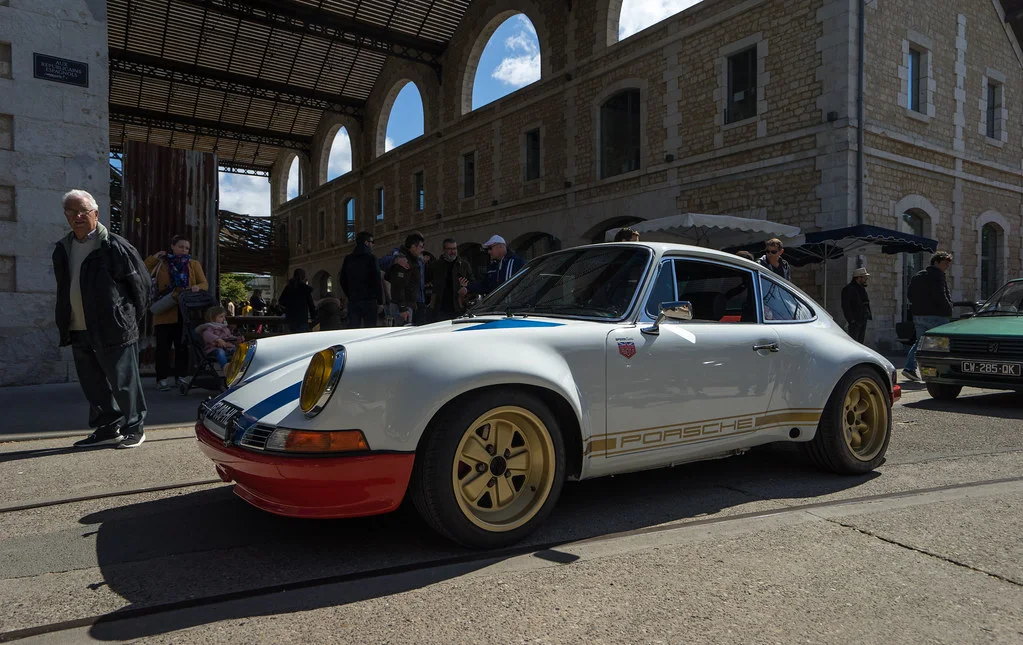
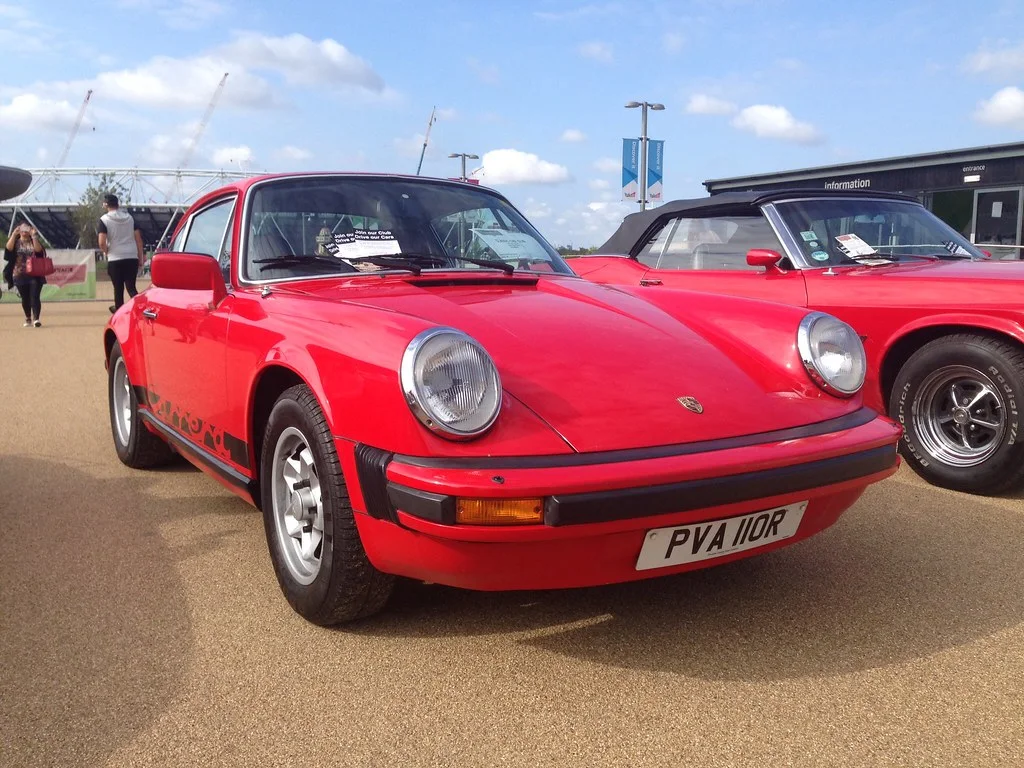
A low sports car with a sloping roofline, rounded lamps, long rear deck, and a compact cabin.
- Design lineage
- Porsche
- Introduced
- 1963 onward reference
- Materials
- Metal, glass, rubber, systems
- Setting
- Vehicle design reference
Visible evidence
Why it matters
The 911 is useful as a visual culture example because the car's identity is carried by a few persistent relationships: cabin, hood, rear weight, and circular lights.
Visible evidence
Look closer
Three details to carry with you.
- 01
Follow the roofline from windscreen to rear deck.
- 02
Compare the rounded lamps with the low, horizontal body.
- 03
Notice how the cabin appears placed inside rather than on top of the car.
Documented context
How it was made
Painted metal or composite panels · Glass and rubber · Mechanical and electronic systems
Documented context
Story and context
The 911 was introduced in the 1960s and developed through many generations while retaining a recognisable design lineage.
Documented context
Culture and context
A car can carry engineering, status, memory, and desire at once. A photograph is better at starting those questions than settling them.
Documented context
Honest facts
Keeping certainty visible.
- A photo cannot verify model year, originality, mechanical condition, safety, value, or ownership.
- The brand name is used for design history, not a vehicle inspection or endorsement.
Interpretation
Interpretation
One way to read it.
The car feels fast even when still because its curves organise the body around a forward promise.
Another reading
The restraint may be the more important story. The car's power is suggested through control rather than decoration.
This example follows the same order as an Art Says Hi result. Visible details come first, documented context comes next, and interpretation stays clearly marked.
Take another look
Which shape makes the car feel most recognisable: roofline, lamps, rear deck, or stance?
Upload a photoSources
Follow the sources, then return to the image. Some links lead to a collection or publisher website.
Image credits
Porsche 911 (classic)
Falcon_33 (opens in a new tab)CC BY-SA 2.0 (opens in a new tab)
Resized and converted to WebP for local delivery; composition otherwise unchanged.
Porsche 911 - Classic Car Boot Fair - QE Park
Paul David Smith (opens in a new tab)CC BY 2.0 (opens in a new tab)
Resized and converted to WebP for local delivery; composition otherwise unchanged.