Guide · Open images
Where to find public-domain art images you can actually use
Several major museums publish high-resolution images of public-domain works under open licences — free for almost any use, including commercial ones. Where they are, and what the licence line actually says.
Want a real artwork image — for a talk, a class, a website, a wallpaper, or to run through a scanner out of curiosity? Several of the world's largest museums publish high-resolution photographs of public-domain works under open licences, free for almost any use including commercial ones. The collections below are the reliable starting points.
The checkable fact is the licence line on the object's own page, not the programme's press release. Everything else in this guide is about finding it — and keeping it.
What 'public domain' and 'open access' actually mean
'Public domain' is a copyright state, not a museum policy: the work's copyright has expired or never existed, so the underlying artwork belongs to everyone. An 1889 Van Gogh is public domain; a 1965 print usually is not.
'Open access' is the museum's own label for files it offers without licensing restrictions. The commonest instrument is Creative Commons Zero (CC0) — a public-domain dedication covering the museum's digital image itself — but the label varies, and some collections use their own terms instead.
The two overlap but are not the same. A museum can put CC0 on a photograph of a work it believes is public domain — the Art Institute of Chicago uses exactly that hedged phrasing — while the underlying work's status still matters for your use. The licence line on the object page is the operative fact; the programme page is the promise behind it.
The big open collections
The Metropolitan Museum of Art's Open Access programme dedicates images of its public-domain works to CC0 — the object pages carry the licence line, and the collection is one of the largest open image sets anywhere.
The Art Institute of Chicago offers what it describes as free, unrestricted use of more than 50,000 images of works believed to be in the public domain, all under CC0. Its collection search has a public-domain filter checkbox, object pages carry a download button, and if the button is absent the museum's own advice is to assume the work is not in the public domain. It asks — requests, not requires — a caption in the form 'Artist. Title, Date. The Art Institute of Chicago.'
The Cleveland Museum of Art runs open access across more than half its collection — high-resolution images and metadata under CC0, refreshed each January. Downloads are offered only for CC0 works, and the museum suggests a citation format running from artist and title through credit line and accession number.
The Rijksmuseum was an early mover: it has placed the majority of its digitised objects in the public domain, and its Data Services portal now offers over 600,000 high-resolution object photographs plus open collection metadata, with licensing marked per record.
And the Smithsonian's Open Access programme released millions of images and data records — more than five million items — under CC0 across its museums, usable for any purpose without asking permission.
Reading the licence on a museum page
On every collection above, the answer lives on the object page, not the programme page. Look for the licence line — 'Public domain', 'CC0', an open-access mark — near the image or in the object's data. At the Art Institute of Chicago the download button itself is the signal; at Cleveland, look for the CC0 designation in the object data.
Read what the licence actually attaches to. A CC0 mark on a museum's photograph clears the museum's rights in that file — and the museum can only dedicate what it owns, which is why the Art Institute describes its images as 'believed to be' in the public domain and leaves responsibility for any third-party rights with the user.
Then keep the record with the file: the object page URL, the accession number, the credit line, the licence as stated, and the date you downloaded it. Licences get updated; your saved record is both your citation and your evidence.
What credit lines to keep
Open licences may not require a credit, but keeping one is cheap insurance and good practice. At minimum save the artist, title, date, the museum's name, the object page URL, and the licence as stated — plus the date you downloaded it.
Each museum suggests a shape. The Art Institute of Chicago requests 'Artist. Title, Date. The Art Institute of Chicago'; Cleveland publishes a fuller suggested citation — artist, title, date, medium, dimensions, credit line, accession number and URL — and even where CC0 makes credit optional, the accession number is the detail that lets anyone retrace your file.
Keep the record alongside the image, not in your memory: museums update licences and object data, and the saved page is both your citation and your evidence of what the licence said on the day.
When an image isn't free: editorial and commercial use
Works still under copyright stay outside these programmes — on Cleveland's site the download button simply doesn't appear for them. A photograph of an in-copyright artwork, a work on loan, or a piece the museum doesn't fully own may all be excluded even when the frame around them is old.
CC0 clears copyright in the image file; it does not clear everything else. Trademarks, artists' moral rights in some countries, and privacy interests in photographs of identifiable people can all survive a public-domain file. The practical shorthand: editorial use — illustrating, teaching, commenting — carries the fewest traps; commercial use — advertising, packaging, resale — is where the leftover rights bite. Where a use is commercial and the stakes are real, a lawyer who knows your jurisdiction is the right next step; this guide is general information, not legal advice.
And the museum's own website terms still apply to how you use the site itself. Open access is generous, not lawless.
Try it: from open collection to reading
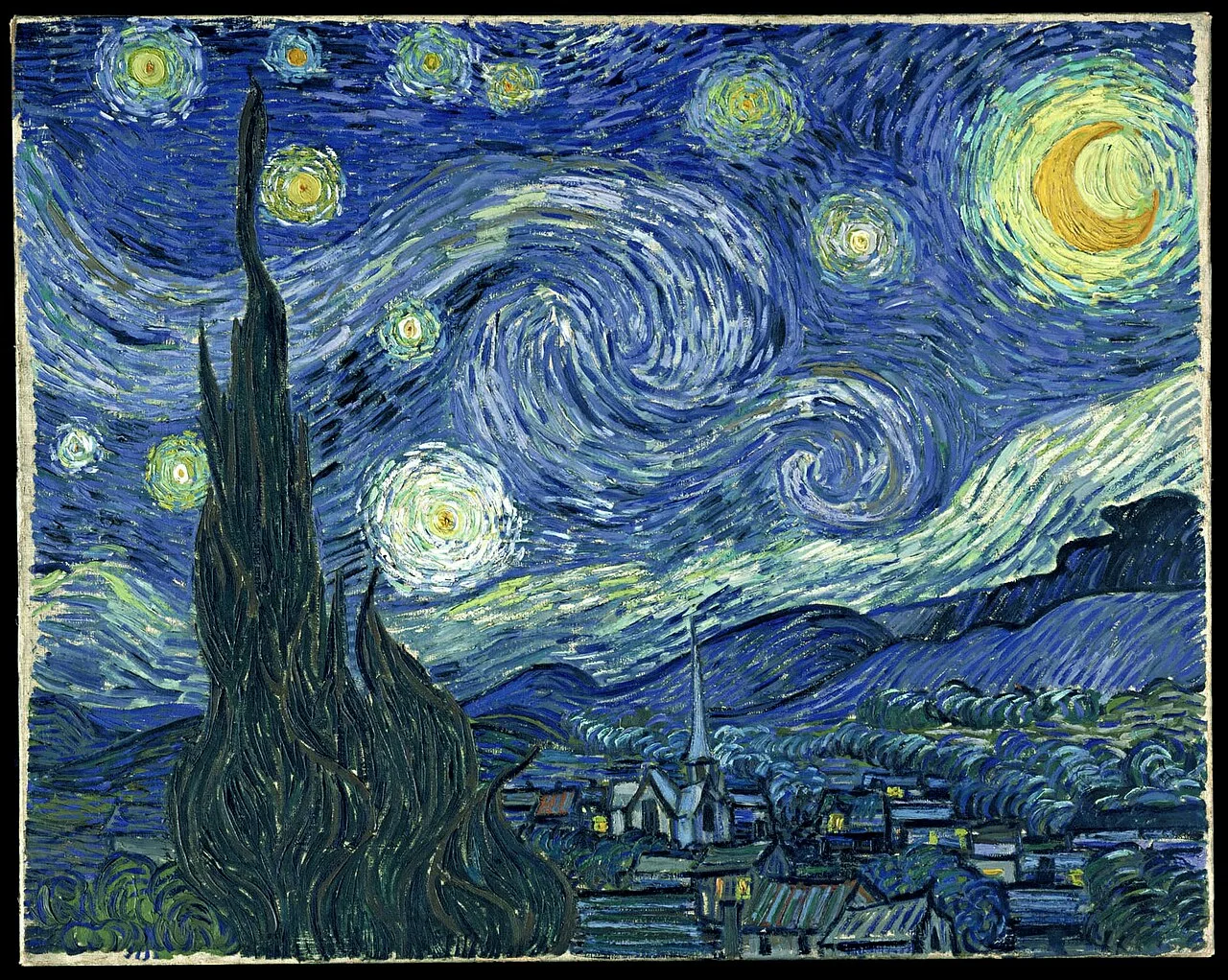
Pick a collection above, filter for public-domain or CC0 works, and download an image you actually like — a Hokusai wave, a Van Gogh sky. This site's own example gallery runs on exactly this kind of material: the Starry Night reading beside this guide's header uses a public-domain reproduction, credited the way the museums ask for.
Then scan it. What comes back is AI-generated and provisional — which is what makes the exercise useful: put the reading's documented-context claims next to the museum's object record and see how much agreement there is. The museum page is the ground truth the reading gets measured against — the methodology explains how the layers are supposed to stay separate.
Where the reading and the record disagree, the record wins — but the disagreement is worth reporting through the result page's 'Report a problem with this reading' link, because corrections are how the readings improve.
Take another look
Open collections are worth browsing for their own sake — the next time you want a painting on your lock screen with a clear conscience, start at the Met or the Rijksmuseum. Then bring the file to the scanner and see what an AI-generated, provisional reading makes of it.
Sources
- Art Institute of Chicago, Open access images (opens in a new tab)
- Cleveland Museum of Art, Open access (opens in a new tab)
- The Metropolitan Museum of Art, Open access (opens in a new tab)
- Rijksmuseum Data Services (opens in a new tab)
- Smithsonian Open Access (opens in a new tab)
Licence counts and programme terms change; check each museum's current object pages before reuse. This guide is general information, not legal advice. Sources last checked 2026-10-01.
Read a photo of your ownYour photo is only sent when you choose Start reading.
Spotted an error? Tell us