
Guide · Checking a reading
Check your reading: a five-minute audit for any image result
A reading is a draft, not a verdict. Five checks — the claim's layer, a falsifiable point, the source behind the context, the alternative reading, and what would change your mind — tell you how much weight to give it.
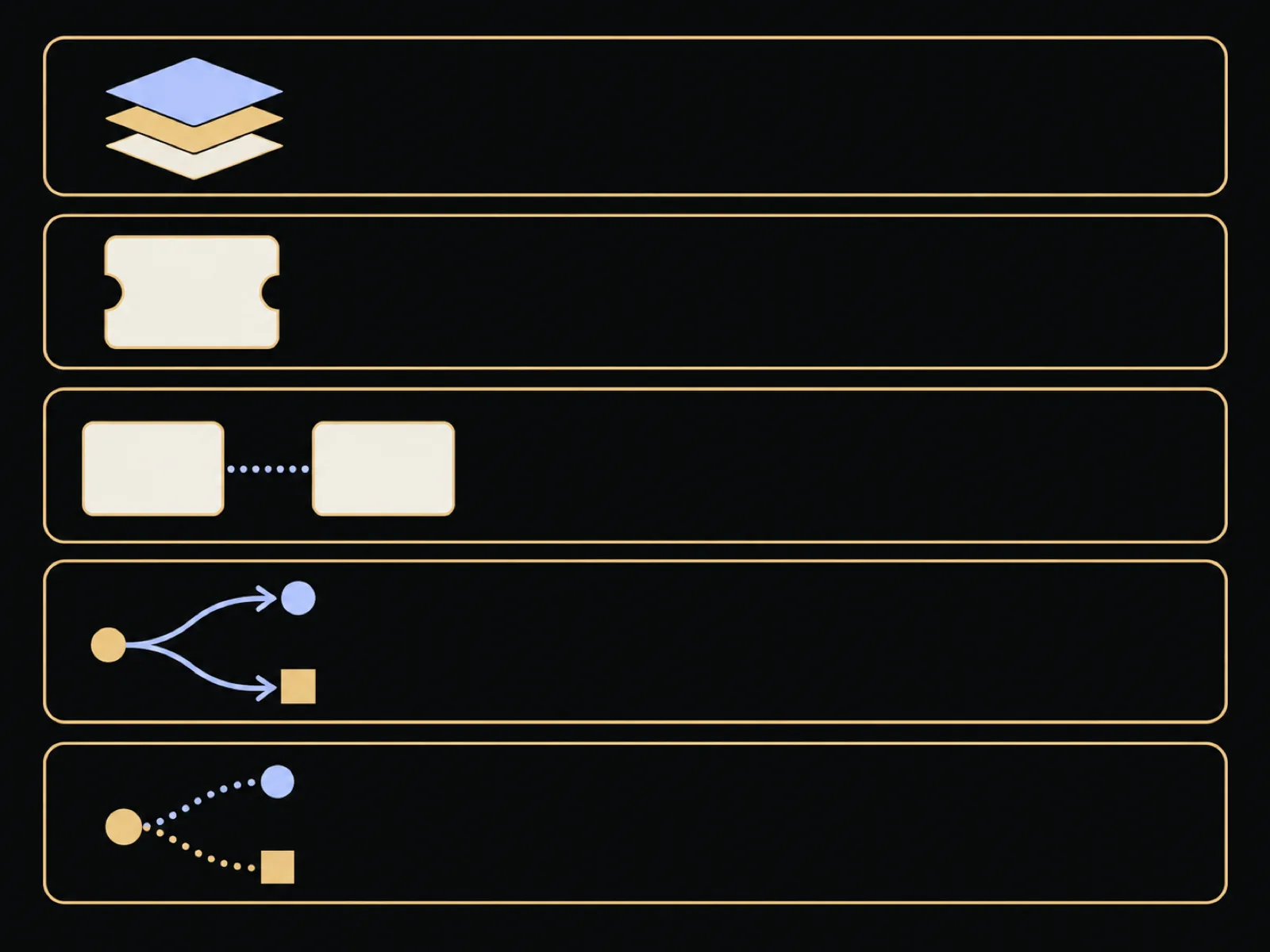
A scan comes back and the page fills with confident-sounding sentences. Which of them can you actually use? A reading from any image tool — this one included — is a hypothesis assembled from pixels, records and patterns. On this site that hypothesis is explicitly AI-generated and provisional: it can be right, roughly right, or cleanly wrong, and the page itself will not always tell you which. This checklist is the five-minute audit that will.
It works on any image result, but it is written around the shape of a reading here: a title line, a provisional-confidence chip, the numbered 'Look closer' list, and the folded sections behind it. The audit itself is faster than describing it — five checks, about a minute each, and a failed check is information too.
One ground rule. Everything below assumes the reading admits its own layers — what it saw, what a record says, and what it concluded — the way the Art Says Hi methodology keeps visible evidence, documented context and interpretation apart. If a result presents every sentence as equally certain, that is already a finding.
The five-minute audit
Run the checks in order; each takes about a minute.
Match each claim to its layer. Decide whether a sentence is an observation, a documented fact, or an interpretation before deciding whether to trust it.
Find one claim you can falsify. Pick the most checkable statement in the result and test it against the object or the record.
Check the context against the source. For anything credited to a record, open the source and compare it directly.
Read the alternative interpretation. If the result offers a second reading, take it seriously — it is the system's own admission that the truth could sit elsewhere.
Decide what would change your mind. Name the evidence that would overturn the reading before you rely on it.
Match each claim to its layer
On a reading here, the layers have addresses. Visible evidence lives in the main description and the numbered 'Look closer' list. Documented context lives in the line beneath the result title — creator, date and medium — in the 'About this subject' rows, which carry collection, dimensions and the other object facts, and in 'Sources and further reading'. Interpretation lives in the sections titled 'Story', 'Interpretation' and 'Another way to see it'. The audit's first job is to sort the sentences you care about into those three piles.
A layer error is the most common way a reading misleads. An interpretation phrased like an observation — 'the sitter is melancholy' is a seeing, not a sighting — borrows authority it did not earn. So does a record-level claim, a name or a date, offered with no record behind it. When you find one, demote the paragraph it lives in by a notch of trust, not just the sentence.
The confidence chip is a label about the whole reading, not a guarantee of each sentence. On this site it is marked 'Provisional confidence' precisely because it is the reading's own report, not a measured accuracy, and the verification note beside it says which details were checked against an outside record and which were not. Treat a strong chip as a prompt to audit, not a reason to skip it.
Find one claim you can falsify
A falsifiable claim is one the world can contradict: 'signed in the lower right', 'a lithograph', 'the object is porcelain', 'photographed outdoors'. The unfalsifiable kind — 'the mood is uneasy', 'influenced by Art Nouveau' — cannot be disproved by looking, which is exactly why it should carry less weight.
Take the most concrete claim in the result and test it yourself. If the reading says 'signed lower right' and there is no signature in the lower right, it failed the cheapest possible test — and a single failed concrete claim costs a reading more than ten vague ones it got right can repay.
If the claim survives, score a point for the observation layer only. A correct observation does not upgrade the context or the story built on top of it; it just means the first layer is doing its job.
Check the context against the source
Context claims borrow their authority from records — museum object pages, catalogues, collection databases. The audit question is not 'does this sound right' but 'does the record actually say it'. On this site the sources sit in 'Sources and further reading', and the page is honest about their status: unless the verification note says otherwise, listed sources are references the reading drew on, not records it independently checked.
So open the record and compare fields. Title, date, medium, accession number — agreement on two or three independent fields is meaningful; agreement on a single word is not. Where the record and the reading disagree, the record wins. That is what 'documented' means.
If you cannot find the record at all, that is a neutral result, not a disproof — collections are digitised unevenly, and catalogue raisonnés live in print as often as online. But it moves the claim from 'documented' to 'unconfirmed', and the honest note to write is 'not yet traced', not 'false'.
Read the alternative interpretation
A careful reading shows its other hand. On this site it sits in 'Another way to see it' — the second account the evidence also supports. Read it as seriously as the headline interpretation, because its existence is itself a finding: it means the image admits more than one account.
Where the alternative is more boring than the headline — 'a later homage' rather than 'a lost original', 'decorative object' rather than 'ceremonial one' — the boring version is usually the honest one. Extraordinary claims carry the burden of proof; ordinary ones do not have to.
And if a result offers no alternative at all on an ambiguous image, count that as a small mark against it rather than a sign of confidence. The essay on why uncertainty matters argues the same point at greater length.
Decide what would change your mind
The last check is about you, not the reading. Before you cite it, share it, buy on it or worry about it, name the evidence that would overturn it: a label on the back of the frame, a catalogue entry, a specialist's ten-second glance. If nothing could change your mind, you are not holding a conclusion — you are holding a preference.
Writing the condition down keeps the reading in its weight class. 'This looks like a mid-century print, and a cataloguer could confirm it in one look' is a sentence you can act on. 'This is definitely mid-century' is a sentence you will spend the next year defending.
When the answer is 'ask a human'
Escalate when being wrong is expensive: buying, selling, insuring, donating, publishing an attribution, or anything that smells like forgery or stolen property. The audit can tell you a reading is weak; it cannot make it strong, and it was never meant to replace a professional looking at the object itself.
The routes are the same ones the companion guides end at: a conservator for physical questions — the American Institute for Conservation keeps a directory — an appraiser for value, an auction specialist for a market view. The first-steps guide for a found painting walks through which door answers which question.
And if the reading is simply wrong — wrong object, an invented fact, an impossible claim — that is worth reporting rather than just abandoning. The result page carries 'Report a problem with this reading', and the contact page reaches the same desk. Corrections are how the readings get better.
Take another look
The audit gets faster every time you run it — after a few readings the layer-check happens while you read. If a recent scan is still in your browser history, open it and run the five checks on it now. If it fails one, the scanner is still there for a second pass — another AI-generated draft, just as provisional, to run the same checks on.
Sources
- Clark Art Institute, research guide to identifying works of art (opens in a new tab)
- American Institute for Conservation (opens in a new tab)
- Getty Art & Architecture Thesaurus (opens in a new tab)
The audit is Art Says Hi editorial guidance; the escalation routes reflect how conservation and identification professionals actually work. Sources last checked 2026-10-01.
Read a photo of your ownYour photo is only sent when you choose Start reading.
Spotted an error? Tell us