
Designed objects · Discovery
Visual readingAnglepoise Lamp
A lamp that makes balance visible through springs, joints, and a small pool of light.
Summary
A lamp that makes balance visible through springs, joints, and a small pool of light.
Reading status
A design reading of a lamp type, not an electrical safety check or product authentication.
At a glance
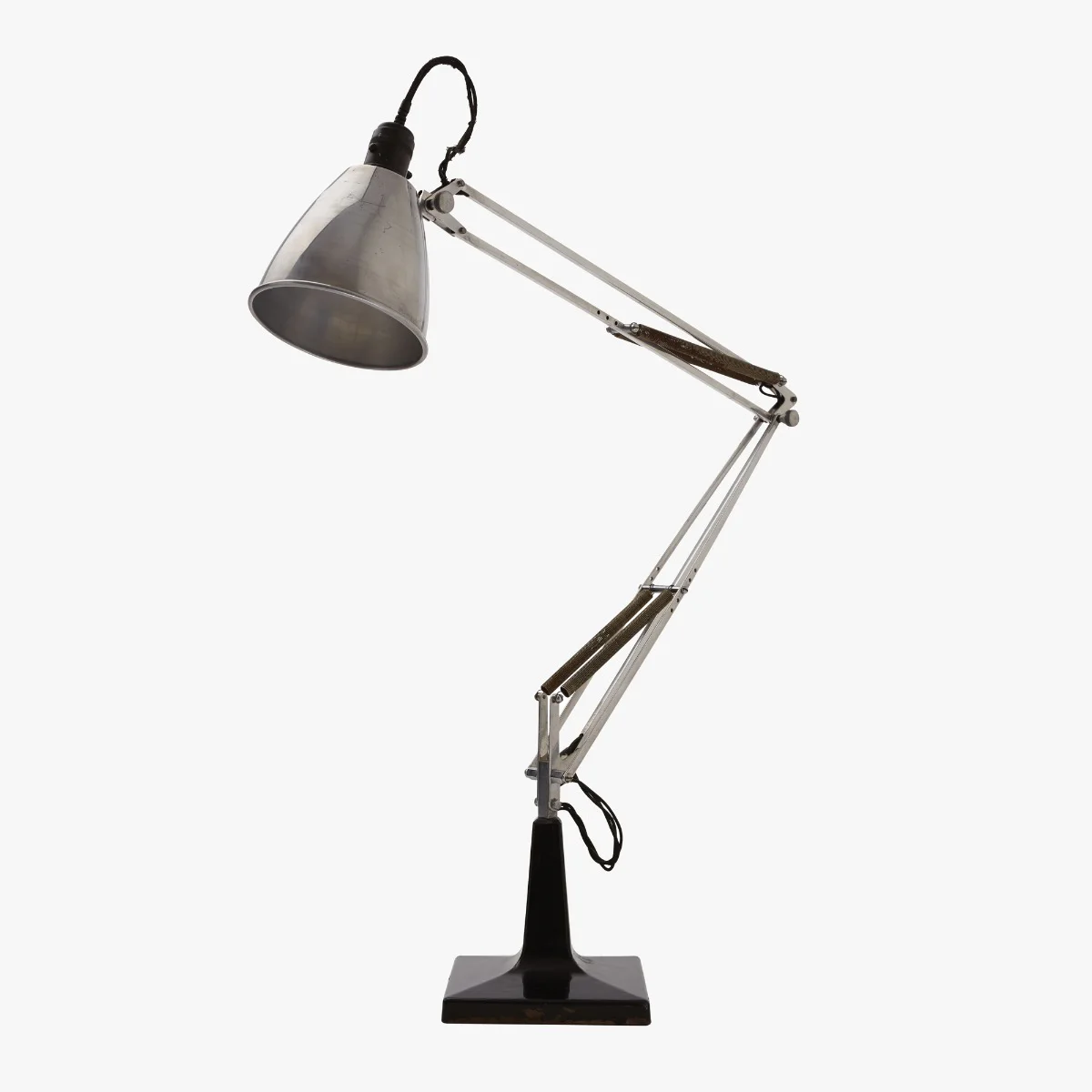
An articulated desk lamp with a counterbalanced arm, conical shade, and weighted base.
- Design lineage
- George Carwardine
- Period
- 1930s design reference
- Materials
- Painted metal, springs, shade
- Setting
- Domestic or studio object
Visible evidence
Why it matters
The Anglepoise lamp turns movement into a visual identity. Its usefulness is easy to read because the joints and springs announce how the light can travel.
Visible evidence
Look closer
Three details to carry with you.
- 01
Follow the arm from base to shade and find each pivot.
- 02
Compare the heavy base with the apparently light upper structure.
- 03
Notice how the shade edits the light into a directed shape.
Documented context
How it was made
Painted metal arm · Counterbalance springs · Metal shade and weighted base
Documented context
Story and context
The design grew from George Carwardine's work on balancing mechanisms and became a familiar task lamp through industrial production.
Documented context
Culture and context
The lamp is often used as shorthand for British design. Its deeper lesson is more ordinary: a good object can make its adjustment legible.
Documented context
Honest facts
Keeping certainty visible.
- A photo cannot verify model, maker, electrical safety, or working condition.
- The page discusses the visual design language rather than giving repair or product advice.
Interpretation
Interpretation
One way to read it.
The lamp looks alert because its body is always prepared to change position.
Another reading
The visible springs can make the object feel tense rather than helpful, as if the light is held in a state of readiness.
This example follows the same order as an Art Says Hi result. Visible details come first, documented context comes next, and interpretation stays clearly marked.
Take another look
Where does the lamp look most balanced, and where does it look most like it might move?
Upload a photoSources
Follow the sources, then return to the image. Some links lead to a collection or publisher website.
Image credits
Anglepoise lamp, model 1208.jpg
Upphovsperson okänd (opens in a new tab)CC BY-SA 4.0 (opens in a new tab)
Resized and converted to WebP for local delivery; composition otherwise unchanged.