
Designed objects · Flagship
Design referenceEames Lounge Chair
A chair that makes comfort look engineered, layered, and slightly ceremonial.
Summary
A chair that makes comfort look engineered, layered, and slightly ceremonial.
Reading status
A design reference and visual reading, not an authentication, appraisal, or safety assessment.
At a glance
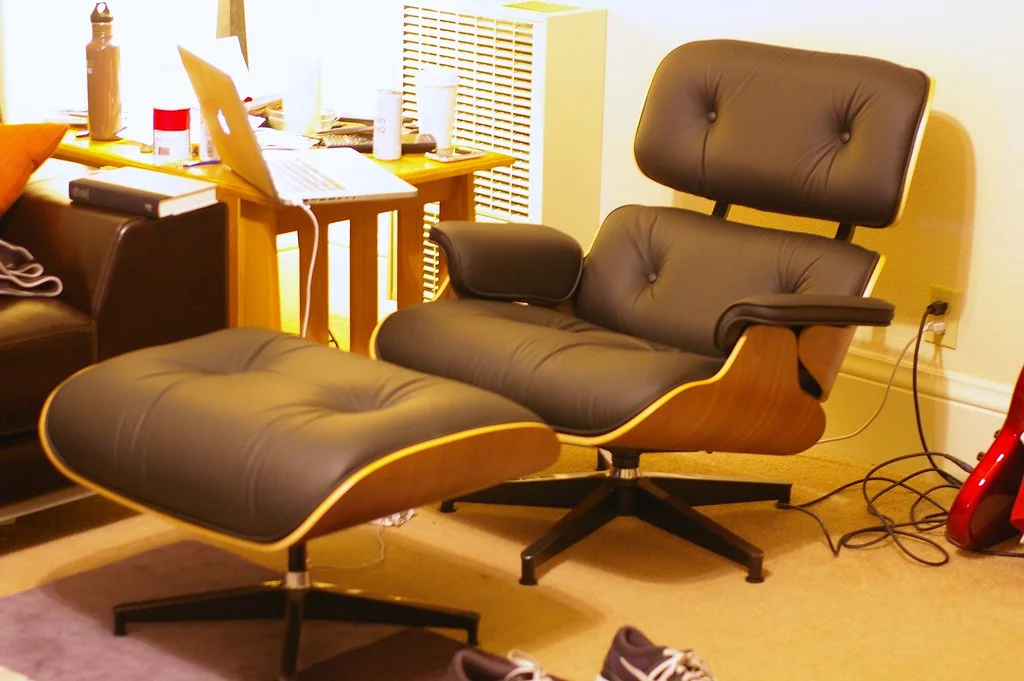
A low lounge chair and ottoman with curved plywood shells, padded leather cushions, and a swivelling base.
- Designed by
- Charles and Ray Eames
- Introduced
- 1956
- Materials
- Plywood, leather, aluminium
- Setting
- Furniture design reference
Visible evidence
Why it matters
The Eames Lounge Chair is useful because it sits between sculpture and furniture. Its curves promise the body a place to settle while its layers keep the construction visible.
Visible evidence
Look closer
Three details to carry with you.
- 01
Follow the outer plywood shell around the cushions.
- 02
Compare the soft leather panels with the harder wood and metal beneath them.
- 03
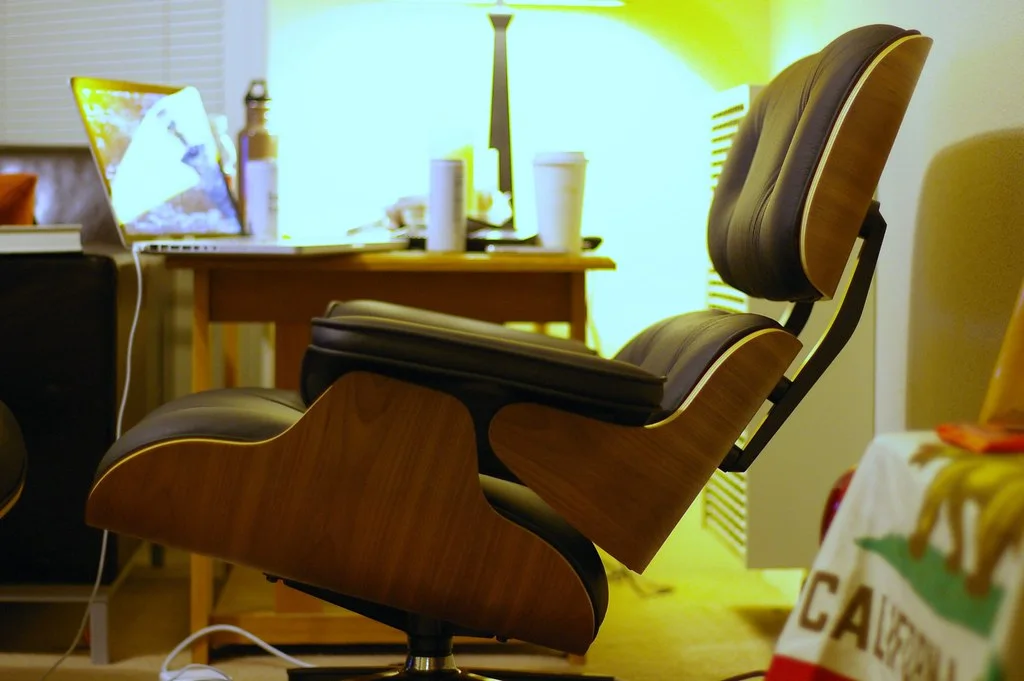
Notice how the low angle changes the chair's relationship to the floor.
Documented context
How it was made
Moulded plywood shells · Leather cushions · Aluminium base and fittings
Documented context
Story and context
The chair was introduced in 1956 and became a widely recognised example of postwar furniture design that combines industrial production with a domestic sense of luxury.
Documented context
Culture and context
Its status can make the chair feel like a design trophy. Looking at its joins and body support brings it back to the ordinary question of how a chair asks you to sit.
Documented context
Honest facts
Keeping certainty visible.
- A photograph cannot verify a chair's maker, edition, originality, or condition.
- Brand and designer names are used for design history, not resale, authentication, or affiliation.
Interpretation
Interpretation
One way to read it.
The chair looks generous because every layer seems to be negotiating between the body and the structure.
Another reading
It can also feel like a display object that borrows the language of comfort. The invitation to sit is real, but so is the invitation to admire.
This example follows the same order as an Art Says Hi result. Visible details come first, documented context comes next, and interpretation stays clearly marked.
Take another look
Does the chair look more like a machine for sitting or a sculpture that happens to support a body?
Upload a photoSources
Follow the sources, then return to the image. Some links lead to a collection or publisher website.
Image credits
Eames Lounge Chair and Ottoman
casey.marshall (opens in a new tab)CC BY 2.0 (opens in a new tab)
Resized and converted to WebP for local delivery; composition otherwise unchanged.
Eames Lounge Chair
casey.marshall (opens in a new tab)CC BY 2.0 (opens in a new tab)
Resized and converted to WebP for local delivery; composition otherwise unchanged.