
Architecture and places · Discovery
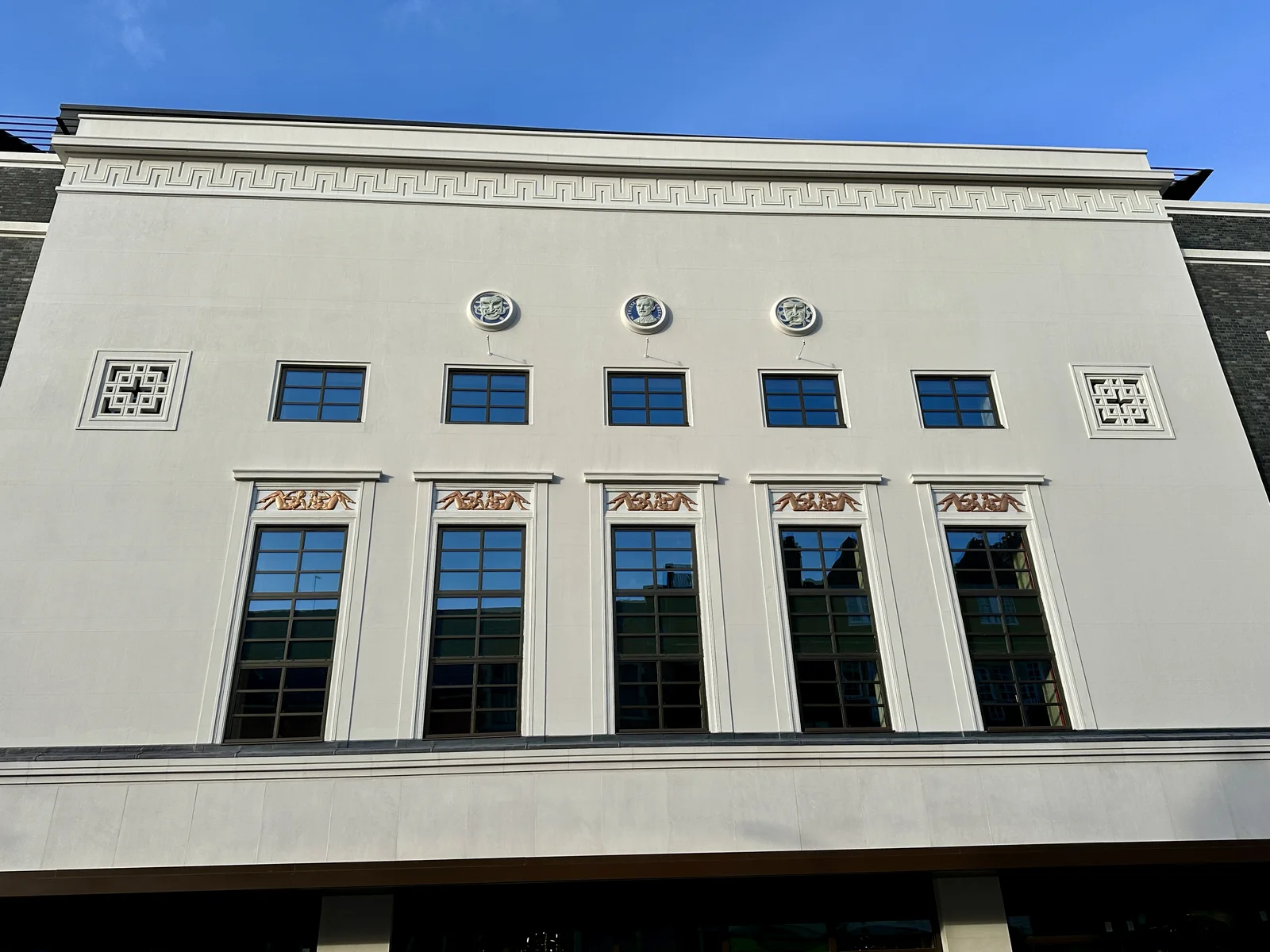
Visual readingArt Deco Cinema Facade
A street entrance turns the promise of a film into a pattern of light, letters, and arrival.
Summary
A street entrance turns the promise of a film into a pattern of light, letters, and arrival.
Reading status
A visual reading of an Art Deco cinema frontage. Exact identity and heritage status require local records.
At a glance
A stepped façade with geometric ornament, a strong entrance, and signage designed to catch attention from the street.
- Subject
- Art Deco cinema facade
- Period
- 1920s–1930s reference
- Materials
- Stone, render, metal, glass
- Setting
- Urban cinema frontage
Visible evidence
Why it matters
A cinema facade is a public invitation. It uses symmetry, vertical emphasis, and light to make going inside feel like crossing into another kind of time.
Visible evidence
Look closer
Three details to carry with you.
- 01
Find the line that leads from pavement to entrance.
- 02
Compare the rigid geometry with the soft glow of signs or lamps.
- 03
Notice how lettering becomes part of the architecture rather than a label placed on top.
Documented context
How it was made
Geometric ornament · Metal and electric signage · Stone, render, and glass
Documented context
Story and context
Art Deco cinema design used streamlined geometry and theatrical lighting to give mass entertainment a memorable architectural frame.
Documented context
Culture and context
The facade sits between building and poster. It sells an experience while also becoming part of the neighbourhood's visual memory.
Documented context
Honest facts
Keeping certainty visible.
- This is a type study, not an identification of one specific cinema or its original architect.
- A photograph cannot confirm building date, listing status, or current operation.
Interpretation
Interpretation
One way to read it.
The entrance feels important because the building makes anticipation visible before the film begins.
Another reading
The same glamour can feel like instruction. The facade tells you how to feel before you have entered.
This example follows the same order as an Art Says Hi result. Visible details come first, documented context comes next, and interpretation stays clearly marked.
Take another look
Which detail creates the strongest sense of arrival: the doorway, the sign, the light, or the symmetry?
Upload a photoSources
Follow the sources, then return to the image. Some links lead to a collection or publisher website.
Image credits
Art deco cinema facade with Friese-Greene head.jpg
Matt Brown (opens in a new tab)CC BY 2.0 (opens in a new tab)
Resized and converted to WebP for local delivery; composition otherwise unchanged.