
Food, print and everyday culture · Discovery
Visual readingCroissant
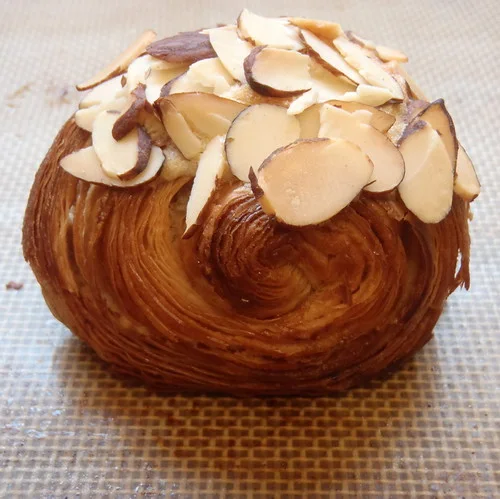
A folded pastry where layers, shadow, and a curved silhouette make process visible before the first bite.
Summary
A folded pastry where layers, shadow, and a curved silhouette make process visible before the first bite.
Reading status
A visual reading of a pastry, not an ingredient, freshness, food-safety, or taste assessment.
At a glance
A crescent-shaped pastry with overlapping layers, browned edges, and a soft interior suggested by the broken surface.
- Subject
- Croissant
- Period
- Everyday food reference
- Materials
- Laminated dough, butter, crust
- Setting
- Food and everyday culture reference
Visible evidence
Why it matters
A croissant is an easy reminder that visual reading is not limited to museum objects. Its folds make time, heat, and handling visible.
Visible evidence
Look closer
Three details to carry with you.
- 01
Follow the repeated layers from tip to centre.
- 02
Compare the darker crust with the softer torn or cut interior.
- 03
Notice how the crescent shape makes the pastry feel directional.
Documented context
How it was made
Laminated dough · Butter · Baked crust and crumb
Documented context
Story and context
The croissant belongs to a long European baking history shaped by laminated dough techniques, local adaptations, and everyday bakery practice.
Documented context
Culture and context
The pastry can carry ideas of morning, craft, indulgence, and place. None of those meanings needs to be treated as a universal truth.
Documented context
Honest facts
Keeping certainty visible.
- A photo cannot prove ingredients, freshness, recipe, food safety, or who made it.
- The page is a visual reading of form and process, not a dietary or culinary recommendation.
Interpretation
Interpretation
One way to read it.
The pastry looks rich because the surface is a record of folding. Its pleasure is designed into the layers before it is eaten.
Another reading
The layers can also make the food look architectural. The pastry becomes a small structure whose fragility is part of its appeal.
This example follows the same order as an Art Says Hi result. Visible details come first, documented context comes next, and interpretation stays clearly marked.
Take another look
Which evidence of process is strongest: the layers, the crust, the curve, or the broken interior?
Upload a photoSources
Follow the sources, then return to the image. Some links lead to a collection or publisher website.
Image credits
Almond croissant
joyosity (opens in a new tab)CC BY 2.0 (opens in a new tab)
Resized and converted to WebP for local delivery; composition otherwise unchanged.