
How to look at art without needing the right answer
Start with the surface, then let the questions get more interesting.
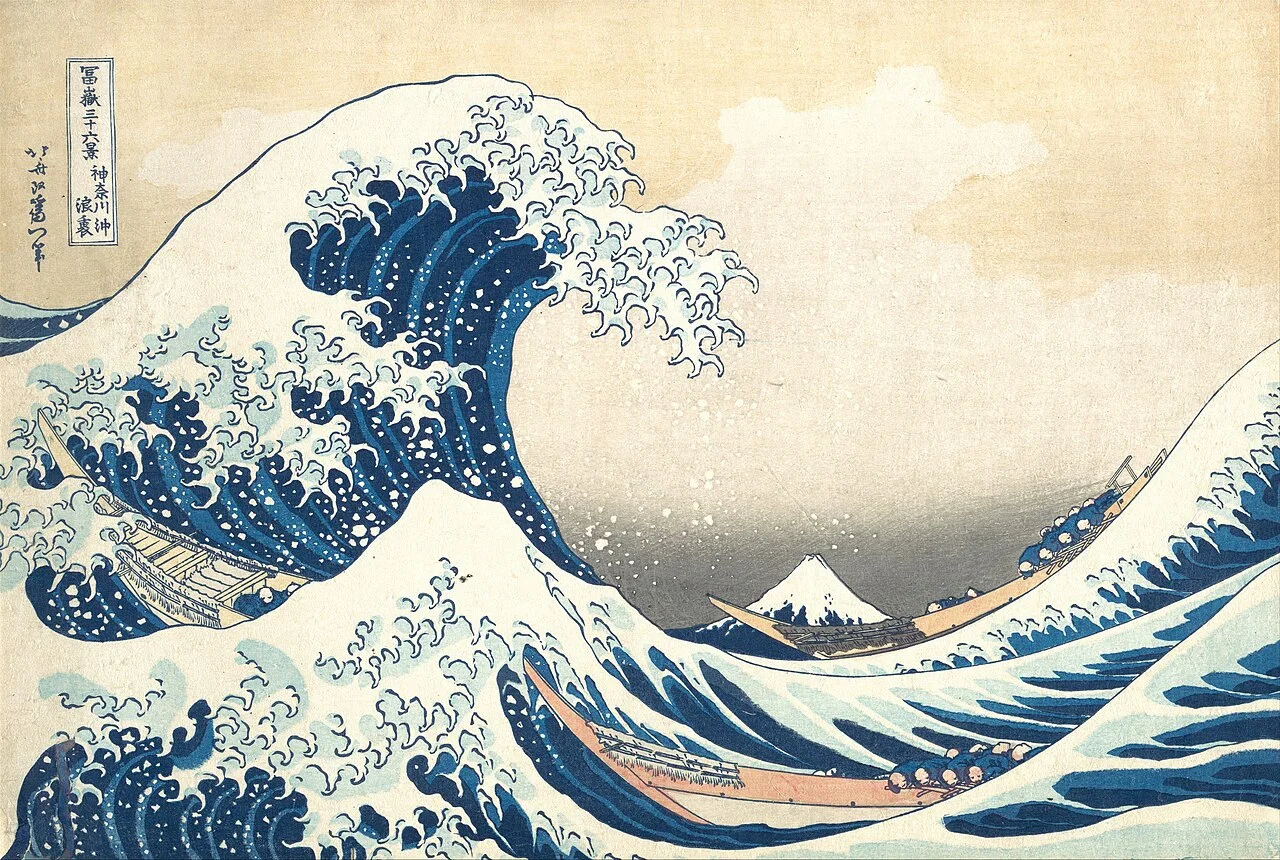
Try this as you read: find the mountain, then follow the boats back to the wave.
Look at The Great Wave · Hokusai (opens in a new tab) · Public domain (opens in a new tab)Begin with three things you can point to: a color, a shape, and a relationship. Ask what they do before asking what they mean.
A useful interpretation should stay connected to the work. It can be personal without becoming arbitrary, and it can be uncertain without becoming empty.
If you want context, add it after your first look. The artist's process, the work's date, and the place where it is held can sharpen a question, but they should not replace what you can see.
A simple sequence
Describe what is visible, notice what repeats, and then ask what those choices make possible. This keeps the first step generous and the interpretation accountable.
Leave room for uncertainty
You do not have to turn every detail into a conclusion. Sometimes the most honest reading is a specific observation followed by a question that the image can support.
Try it with one detail
Choose a small area rather than the whole composition. Name its color, edge, texture, and relationship to the space around it. In Hokusai's The Great Wave off Kanagawa, for example, follow the foaming edge and compare it with the boats and distant Mount Fuji before deciding what the line suggests.
Add context second
Once you have made a few observations, check a museum or catalogue source. Context can explain a material, date, or subject without forcing the picture into one official meaning.
Guides to try next
The subject guides take the same first look further, each with steps to try on a specific kind of thing.
Spotted an error? Tell us