
Guide · Posters
How to read a poster's visual message
Begin with what catches your eye; then ask what the poster wants you to notice and how it makes the case.
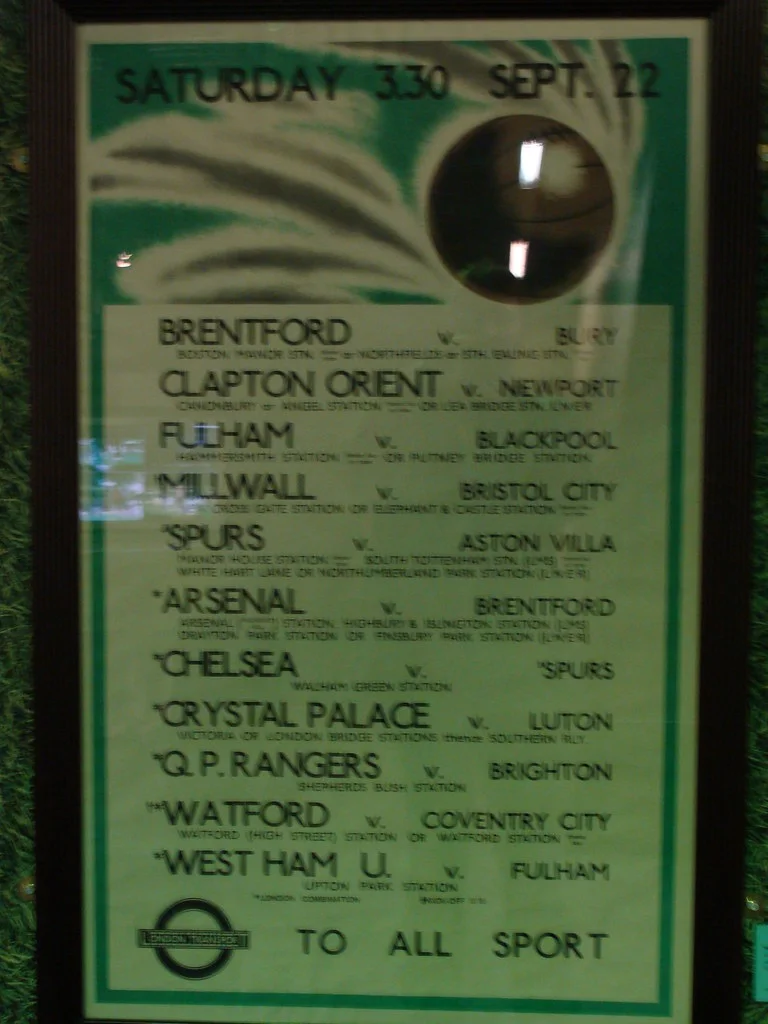
A poster has little time to reach a viewer. Image, type, scale, and spacing can turn a glance into a question or an invitation. To read one carefully, begin with what is visible before deciding what it was meant to achieve. The Library of Congress's primary-source analysis tool (opens in a new tab) offers a useful rhythm: observe, reflect, question, and investigate further. That sequence helps keep a plausible interpretation from becoming an unsupported fact.
What catches your eye first?
Give the poster one glance, then look away. What stayed with you: a word, colour, face, shape, or direction of movement? Return to the whole poster and trace how your eye travelled. Which element is largest? Which is most contrasted? Where do the words begin, and where do they send you next? A reading path is your account of attention, not necessarily the designer's documented intention.
Notice the relationship between image and text. Do they repeat the same idea, or does one add something the other cannot show? Small print may carry the practical information; a photograph of the poster may make it unreadable. Say so instead of filling it in.
- Image
- Headline
- Supporting line
- Call to action
- Small print
Try this in three steps
Observe the whole. Name the visible headline, dominant shape or image, colour contrasts, and readable details. Do not yet supply an audience or date.
Follow the hierarchy. Move from the first point of attention to the second and third. Ask how scale, placement, and typography guide that sequence. Another reader may take a different path.
Check the record. Ask who made the poster, where it appeared, and what it promoted. Use an institutional catalogue or archive record for those answers. If you cannot find one, leave the question open.
- Headline
- Image
- Supporting line
- Small print
A worked example: a London Underground poster
The Art Says Hi London Underground poster reading asks you to separate headline, image, and route or place cues. Start there. Notice how type can become part of the composition instead of sitting outside it. Our local photograph is a credited reproduction of a poster, not an object-specific archive record. For broader context, explore the V&A posters collection (opens in a new tab) and the Library of Congress travel-poster research guide (opens in a new tab); use a focused catalogue entry if making a claim about this particular design.
At full size
On a small screen
What a reproduction changes
A crop can remove the edge that held a sponsor, date, or print mark. A small screen can flatten texture and make lettering disappear. A photo taken on a street adds lighting and surroundings that the printed design did not control. Compare a complete source image with any detail view, then distinguish the poster's visible features from the circumstances of the photograph.
Take another look
Which element first caught you, and did your attention move differently the second time? If you have a poster or print to explore, you can start a browser reading and submit your photo when you choose.
Sources
- Library of Congress, primary-source analysis guides (opens in a new tab)
- Library of Congress, travel posters research guide (opens in a new tab)
- V&A, posters collection (opens in a new tab)
The three-step reading exercise is Art Says Hi editorial synthesis.
Read a photo of your ownYour photo is only sent when you choose Start reading.
Spotted an error? Tell us